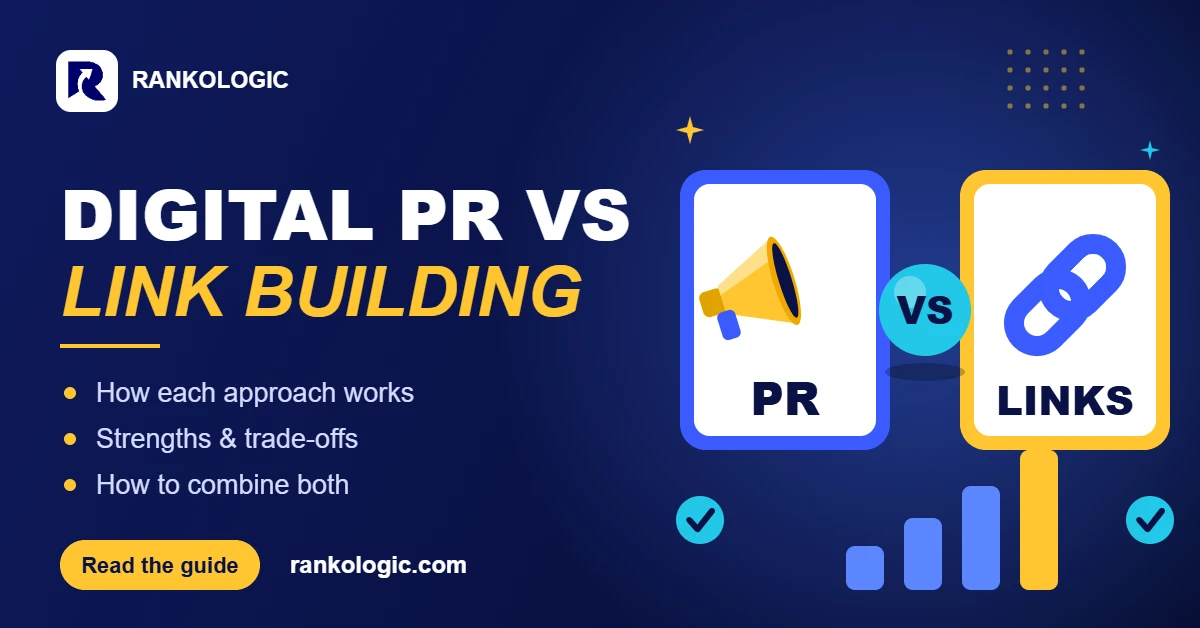
The digital pr vs link building debate confuses many marketers because the two overlap so heavily. Both can earn backlinks, but they go about it in very different ways, with different goals, timelines and risks. This guide breaks down what each approach is, where each one works best and how to combine them so your SEO gains authority and visibility together.
Table of Contents
What Is Digital PR?
Digital PR is the practice of earning online coverage for a brand from news sites, magazines, industry publications and respected blogs. Instead of asking for a link directly, you create something worth reporting: original research, a data story, expert commentary, a campaign or a timely reaction to the news. Journalists and editors cover it, and links and brand mentions follow as a result. Our digital PR service is built around this approach.
What Is Link Building?
Traditional link building is the broader set of tactics used to acquire links to your pages. It includes guest posting, link insertions, resource page outreach, broken link building, directory listings and partnerships. These are usually more direct and controllable, because you decide where you want the link and approach the site for it.
Digital PR vs Link Building: Key Differences
- Goal: digital PR aims for coverage, reputation and links together. Link building focuses mainly on links.
- Approach: digital PR creates a story and pitches it to journalists. Link building targets specific pages or sites and asks for a placement.
- Control: link building gives you control over the page, anchor and target. With digital PR the publication decides how and whether to link.
- Source quality: digital PR can earn links from large news sites that rarely sell or accept guest content. Link building usually works with niche and industry sites.
- Speed and predictability: link building is more predictable and can be scaled. Digital PR results are less certain and may take longer, but a single success can bring many links.
- Cost structure: digital PR needs creative and research effort up front. Link building costs vary by placement and quality.
Benefits of Digital PR
- Links from high authority news and media sites that are hard to get any other way.
- Brand mentions and exposure that reach real audiences, not only search engines.
- Content assets, such as studies, that keep attracting links over time.
- Natural-looking link profiles, since the links are editorial by design.
Benefits of Traditional Link Building
- Control over placement, anchor text and the page being supported.
- Predictable delivery, which makes planning and reporting easier.
- Scalable across many topics, categories and landing pages.
- Good for strengthening commercial pages that are hard to promote with a story.
Limitations of Digital PR vs Link Building
Digital PR is not guaranteed. A campaign can fail if the story is weak or the timing is wrong, and it rarely targets a specific commercial page. Link building can become low value when it relies on poor sites or repeated exact-match anchors. Google also warns against link schemes intended to manipulate rankings, as set out in its link spam policies, so quality and relevance matter for both.
Digital PR vs Link Building: Which One Should You Choose?
Your goals and resources decide the digital pr vs link building choice:
- Choose digital PR if you want brand authority, have a genuinely newsworthy angle or data, and can wait for results.
- Choose link building if you need steady, targeted links to specific pages and want control over delivery.
- Use both if you want authority from major publications and targeted support for the pages that earn revenue.
How to Combine Digital PR and Link Building
- Start with a strong asset, such as a study, report or useful tool that deserves coverage.
- Pitch it to journalists to earn high authority links and mentions.
- Support key pages with relevant guest posts and link insertions that point to the pages you want to rank.
- Vary your anchors and link types, as explained in our anchor text strategy guide.
- Measure results in referring domains, rankings, organic traffic and brand searches, not link counts alone.
Our SEO services bring these tactics together so each one supports the others.
Examples of Digital PR Campaigns
- Original research: survey results or an analysis of public data that reveals something new about your industry.
- Expert commentary: quick, quotable reactions to news stories that journalists are already covering.
- Useful tools and calculators: assets that reporters can reference and readers can use.
- Local or seasonal angles: stories built around events, trends or regional data that outlets want to cover.
Metrics to Track for Each Approach
Measure digital PR by the coverage you earn, the authority of the publications, referring domains gained, referral traffic and growth in branded searches. Measure link building by placements delivered, the relevance and traffic of the linking pages, and ranking and traffic movement on the pages you targeted. Keep both in one report so you can see how they support each other.
FAQs About Digital PR vs Link Building
Is digital PR better than link building?
Neither is better in every case. Digital PR earns authority and exposure, while link building delivers control and consistency. The strongest plans use both.
Does digital PR help SEO?
Yes, mainly through editorial links and brand mentions from respected publications, which can support authority and visibility. Results depend on the quality of the story and the coverage earned.
How long does digital PR take to work?
Campaigns usually take weeks to plan, pitch and land coverage, and ranking effects can take longer to appear.
Final Thoughts on Digital PR vs Link Building
The digital pr vs link building choice is not either-or. Use digital PR to earn authority and awareness, and use link building to direct that strength where it matters most. If you want a plan that blends both, contact our team and we will map it out.